ServicesShed Removal
Shed Removal in Winters
That old shed in the back corner can be gone in a day. We empty it, take it apart, haul off every board and panel, and clear the spot. You get photos of what we found and what we did, so you can see the job without standing over it.
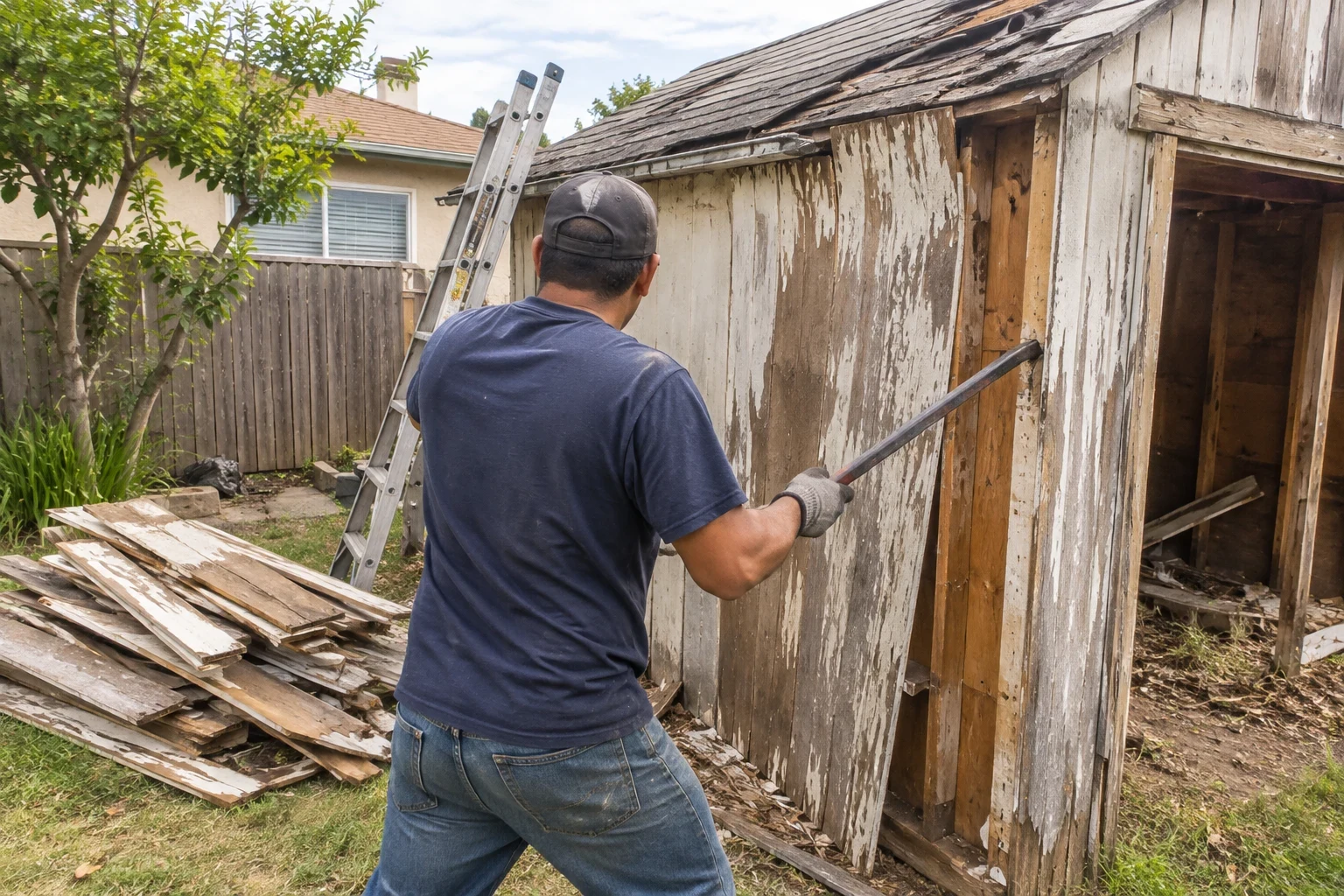
When it's time for the shed to go
Most sheds we take down are past saving. The floor is soft, the roof leaks, or the doors haven't closed right in years. Sometimes the shed is fine but sits right where you want a garden, a patio or a new building.
We do the whole job: clear out what's inside, take the structure apart by hand, load it and haul it away. Wood, metal and plastic sheds all come apart differently, and we plan for that before we show up.
You don't have to be home the whole time. We take photos before we start, while we work and after we finish, and send them your way. If we find something under the floor, like rot, a rodent nest or an old pipe, you'll see it the same day.
What the job includes
- Emptying the shed
- Old tools, paint cans, broken mowers, boxes. We pull it all out first. Anything you want to keep, we set aside where you tell us.
- Taking it apart
- We remove the roof, walls and floor in sections. Metal sheds get unbolted, wood sheds get cut down, and resin sheds usually come apart at the seams. We work so pieces fall where we plan, not onto your fence.
- Hauling every piece
- All of it goes on our truck: panels, shingles, floor joists, nails and screws. We separate scrap metal for recycling where we can.
- Removing the base
- Skids, wood blocks and gravel come out with the shed. If there's a concrete pad, we'll tell you up front whether breaking it out is part of the job, since that's a bigger piece of work.
- Cleanup at the end
- We rake and pick up the site and run a magnet over the ground for loose nails. Then we walk the cleared spot with you, or send a final photo if you're not around.
Signs your shed is done
The floor gives under your feet
A soft or sagging floor usually means the joists have rotted from sitting on damp ground. Patching the plywood won't fix what's underneath.
Rust holes or a leaking roof
Once water gets in, whatever you store goes bad fast. Metal sheds rust at the seams and along the bottom edge first.
Pests have moved in
Mice, rats, wasps and termites love an old shed. If you're finding droppings or sawdust piles, the structure is often worse than it looks.
It leans or the doors won't shut
A leaning shed has a failing base or frame. Strong wind can finish the job for you, and not in a good spot.
You need the space back
Plenty of sheds come down just because the yard has a better use now. That's a good enough reason.
How the day goes
- 1
Talk it through by phone
Tell us the size of the shed, what it's made of and what's inside. A rough guess is fine. We give you a free, no-obligation estimate and set a day.
- 2
Walk the site first
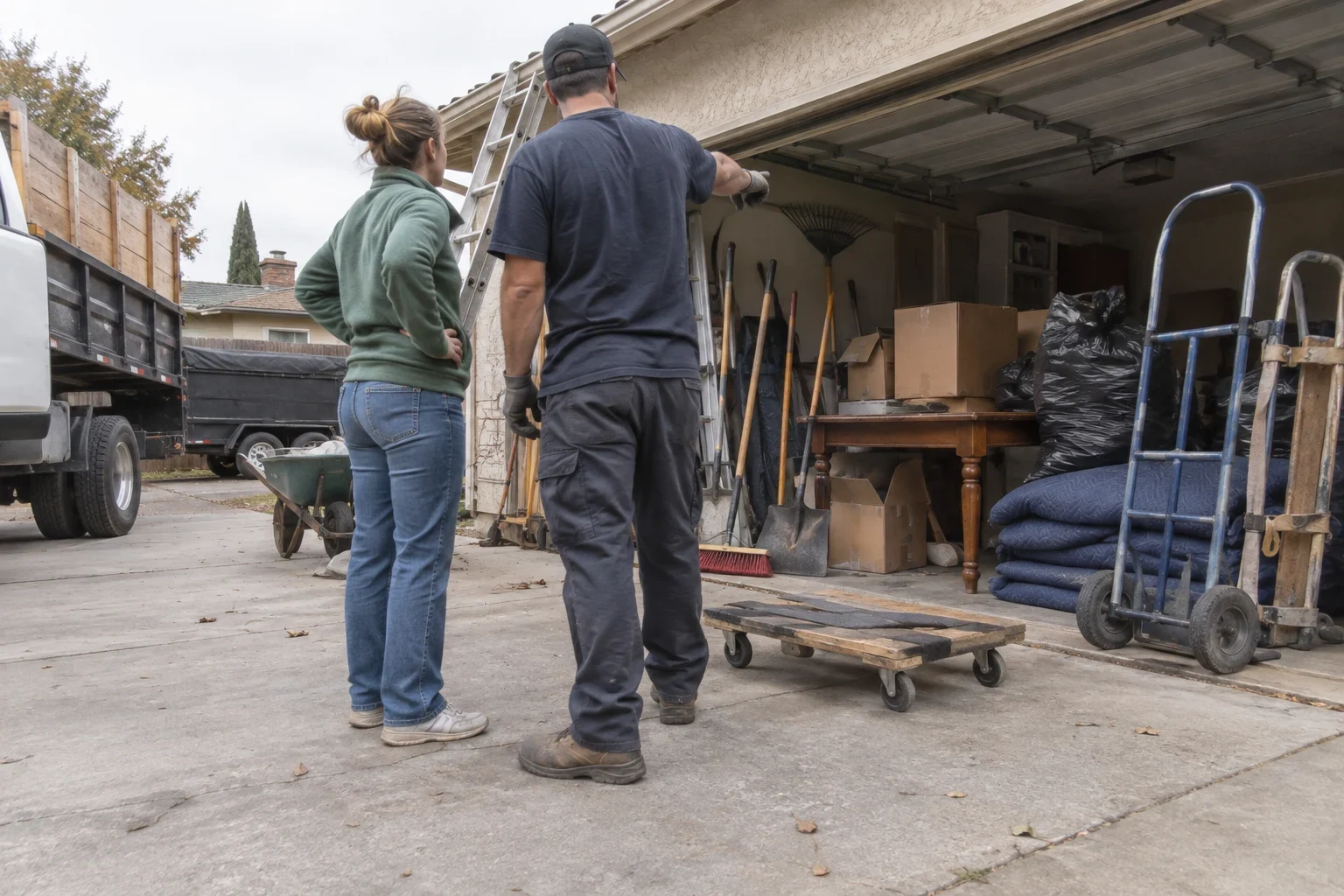
When we arrive, we look at the shed, the path to the truck and anything nearby we need to protect. Then we photograph the shed and its contents before anything moves.
- 3
Clear out, then take down
We empty the shed first and then take it apart from the top down. If the shed has power running to it, it needs to be disconnected by an electrician before we start, and we'll remind you when we book.
- 4
Load, haul and clean
Everything goes on the truck. We clean the ground, pick up nails and fasteners, and make sure you can see the finished spot before we pull out.
What sets the price
We price shed removal upfront, with no surprises. You hear the price before we start, and it doesn't change unless you add something to the job. These are the things that move it.
- Size and material
- A small resin storage box is quick. A large wood shed with a shingle roof and a raised floor takes more time and fills more of the truck.
- What's inside
- An empty shed costs less to remove than one packed with old gear. Heavy items like engines or bags of concrete add weight.
- The base
- Skids and blocks are simple. A concrete slab is a separate job and changes the price.
- Access to the truck
- A shed near the driveway is easier than one at the back of a long lot or behind a narrow side gate. Distance and tight spots mean more carrying by hand.
Shed removal questions
Something not covered here? (530) 349-5761
Do I need to empty the shed before you come?
No. Clearing it out is part of the job. If there are things you want to keep, set them aside or point them out, and we'll leave them where you want them.
Can you take out the concrete pad too?
Ask us when you call. Some pads are thin and come out without much trouble, others are thick or reinforced. We'll tell you plainly what's involved before you decide, and the price will reflect it.
Will you damage my lawn or fence?
We take the shed apart by hand in sections, so nothing comes crashing down. We protect plants and fences close to the work. If something nearby was already damaged, we'll point it out before we touch anything.
What happens to the old shed?
Metal goes to scrap recycling when we can. Clean wood and the rest go to the proper disposal sites. Old paint and chemicals from inside the shed get handled separately, so let us know if you have them.
Can you remove a shed with older siding or roofing?
Some older sheds have cement-fiber siding or roofing that may contain asbestos. We don't remove that material. If we see it, we'll show you a photo and stop until it's been tested and handled by someone qualified.
Ready to get that shed out of the yard?
Tell us about the shed and what's inside, and we'll give you a price before we book. When we leave, the ground is raked and clear.